← Back to Completed Projects
Fast Parameter Estimation for Multi-Scale CFD of Aortic Flow
Project Overview
Developed a fast and scalable framework to enable patient-specific multi-scale CFD simulations of aortic hemodynamics by automatically estimating Windkessel model parameters.
This work bridges 3D high-fidelity CFD (LBM) and 0D reduced-order cardiovascular models, enabling efficient and realistic simulation of blood flow in complex vascular systems.
Problem & Motivation
Accurate cardiovascular CFD simulations require physiological outlet boundary conditions, typically modeled using Windkessel (WK3) models.
However:
- WK3 parameters (Rc, Rp, C) are case-specific and unknown
- Existing methods:
- Require iterative CFD simulations (very expensive)
- Ignore geometry-induced resistance
- Or rely on over-simplified assumptions (e.g., Poiseuille flow)
Result: High computational cost or reduced accuracy in patient-specific simulations.
What I Built (Core Contribution)
Designed a fast parameter estimation pipeline with three key components:
- Geometry-aware resistance extraction
- Performed steady CFD simulation
- Extracted branch-wise geometric resistance (Rg)
- Captures real effects of:
- complex geometry
- bifurcations
- stenosis
- Reduced-order circuit modeling
- Built a 0D circuit analog coupling:
- geometric resistance (Rg)
- Windkessel model (Rc, Rp, C)
- Optimization-based parameter estimation
- Implemented MATLAB global optimization (pattern search)
- Solved WK3 ODE system to match:
- systolic / diastolic pressure
- flow distribution at outlets
- Optimization runtime: < 1 minute
Technical Stack
- CFD Solver: Lattice Boltzmann Method (LBM)
- Framework: C++ + MPI (Palabos-based)
- Optimization: MATLAB Global Optimization Toolbox
- Scale: ~21 million grid points (HPC cluster)
- Physics: Multi-scale coupling (3D CFD + 0D lumped model)
Key Results
- Achieved accurate control of flow distribution and pressure waveform
- Pressure prediction error: as low as ~0.4 mmHg
- Successfully handled: normal geometry, stenosed aorta, non-physiological flow distributions
- Reduced computational cost by:
- eliminating iterative CFD loops
- using only one steady CFD simulation
Engineering Impact
- Enabled fast and reliable patient-specific simulations
- Improved robustness for:
- complex geometries
- pathological conditions (e.g., stenosis)
- Provides a scalable workflow for multi-scale modeling
- Applicable to:
- biomedical simulation platforms
- digital twins in healthcare
- simulation-driven diagnosis tools
Result Gifs
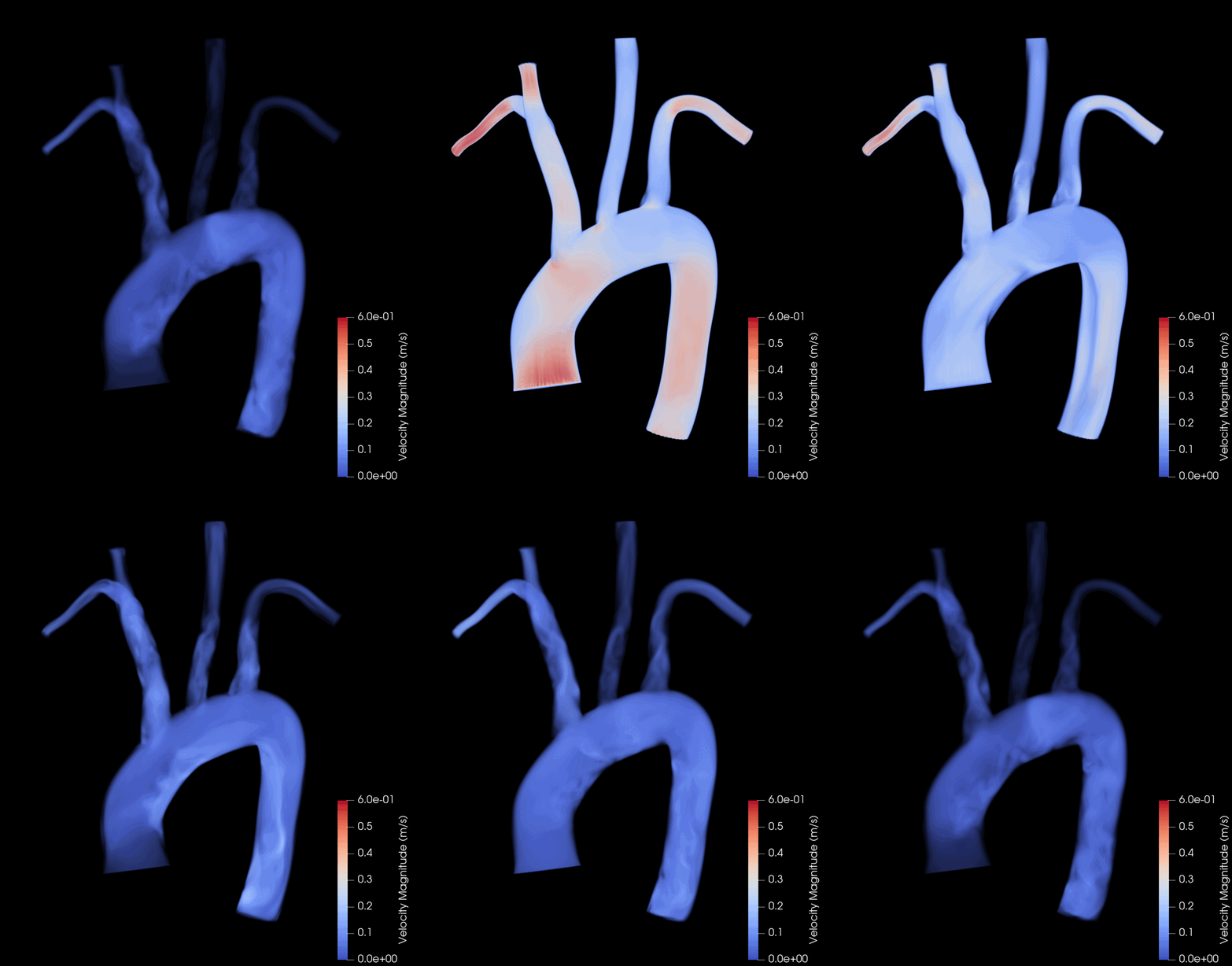
Velocity Field
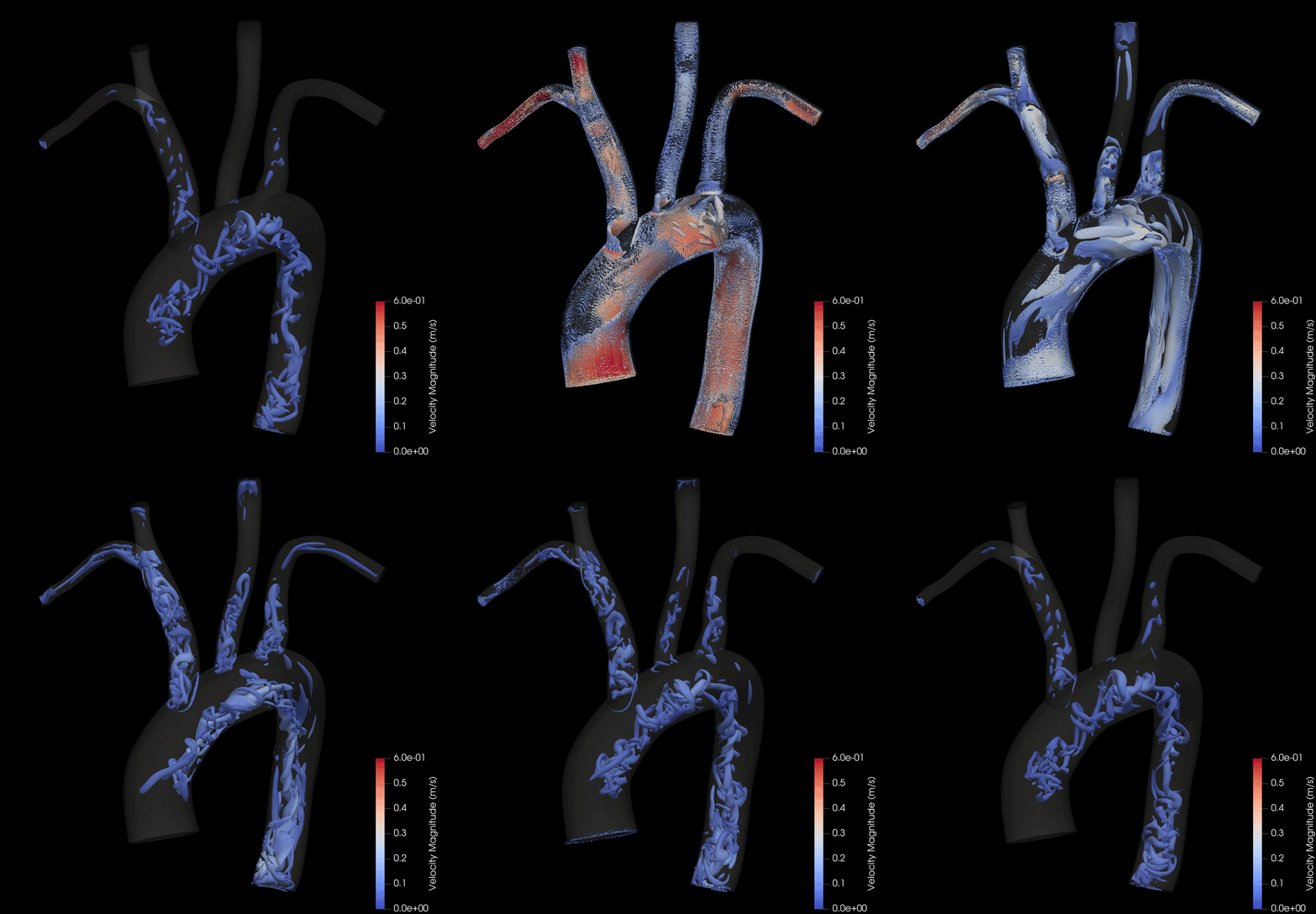
Vorticity Field
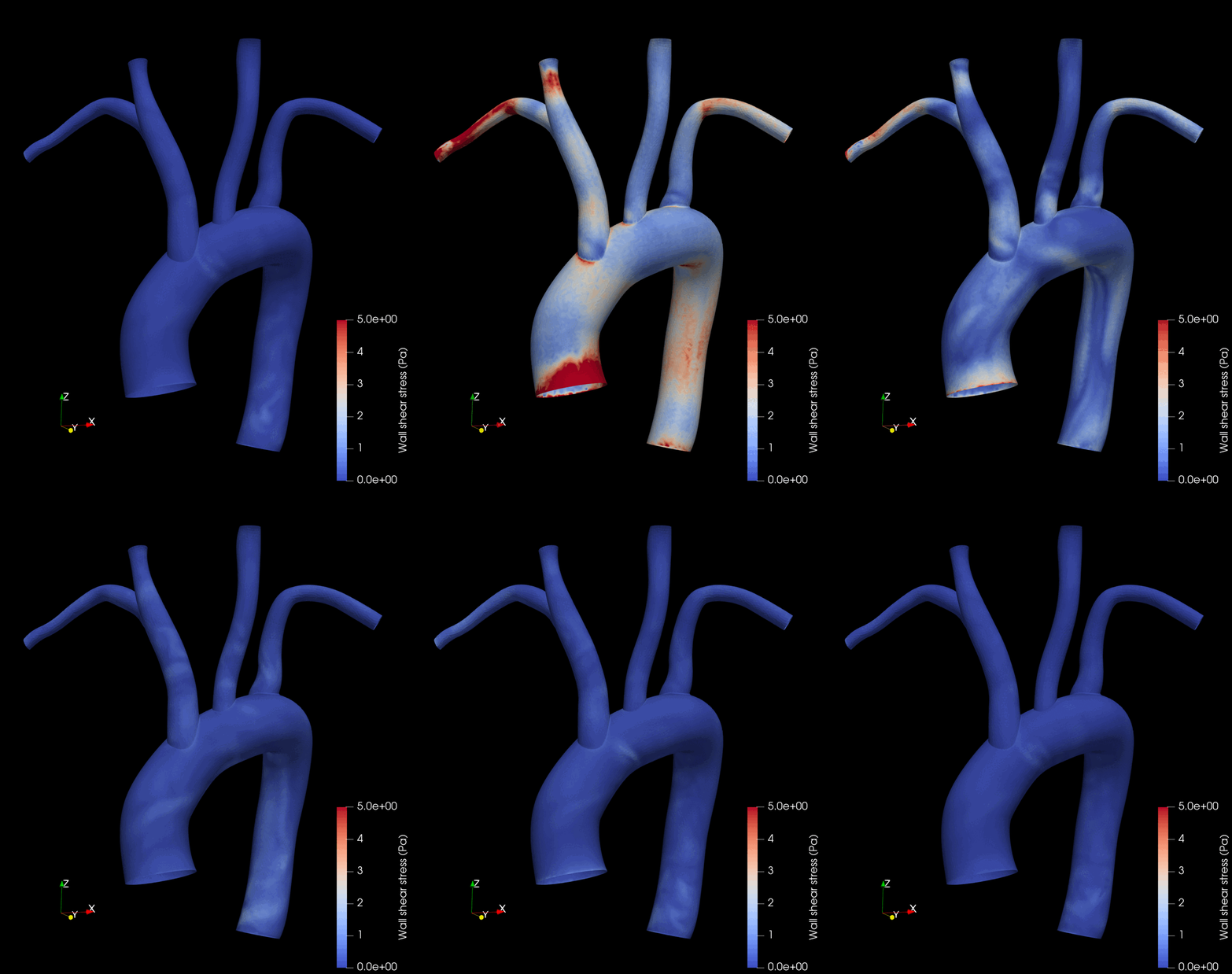
Surface Force
Paper Link
The whole paper can be found here.
← Back to Completed Projects